Building CTF-Alley: Lessons from a Matrix-Inspired Unreal Tournament 99 Map
2026-11-25 01:15
I’ve always loved Unreal Tournament from 1999—specifically the GOTY Edition. Back in the day, my brother and I played it constantly, and I used to play it at school too. I can’t say I’ve ever been particularly good at it, but that was never the point. There were no interruptions, no bloat—just pure playtime.
Like the other maps I’ve built over the years, my goal with CTF-Alley was simple: give players more than one route to the objective. Exploring the idea of doors that connect to completely different parts of the level sounded like a fun mechanic to experiment with, taking inspiration directly from the Keymaker hallway scene in The Matrix Reloaded.
Scaling the Idea to Fit the Engine
Originally, I wanted the doors to send players to random destinations. However, because I wanted the portals to feel seamless—using UnrealEd’s WarpZone system—I ran into engine limitations and had to work within what UT99 could actually handle.
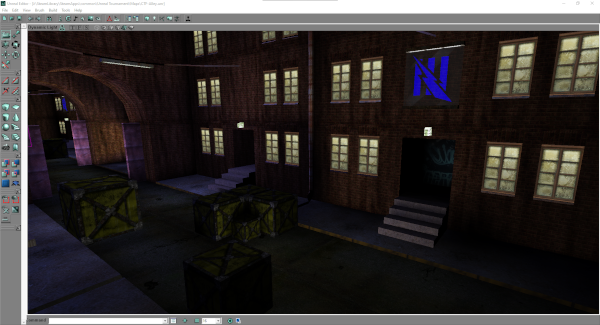
At first, I started building a city alley where every individual apartment would act as a doorway into the rest of the level, complete with elevators carrying players up to different floors. Pretty quickly, the scale became too big and heavy for the game to run smoothly. I had to scale the ambition back, replacing all the individual apartments with ground-floor building entrances instead.
Finding the Right Flow
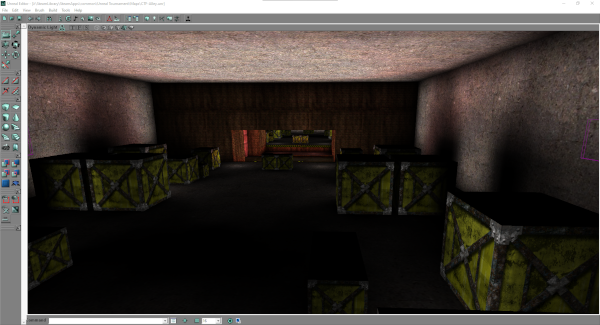
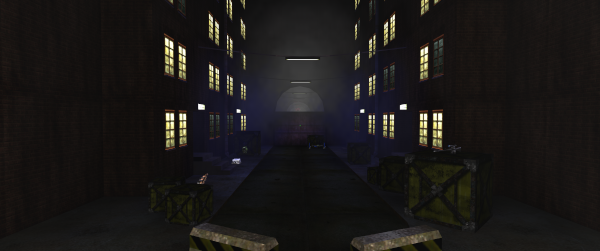
Once I had a long alley lined with building entrances—some moving you forward, others sending you backward if you walked into the wrong door—the map started feeling much shorter than it actually was, while still being way too open. To give players somewhere to take cover, I added a warehouse section in the middle.
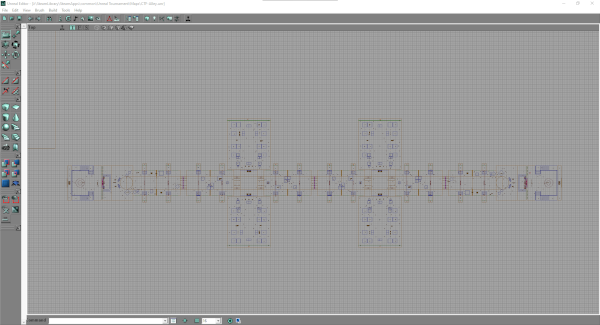
Even then, I realized I needed to break the space into smaller, more distinct sections. I put up closed gates across the alley so the only way around them was through the building entrances, and I added a second warehouse. That gave each team a clear layout: a base, a courtyard area, and a warehouse—tied together with warehouse crates and props scattered down the alley for detail and cover.
Changing the Pace Mid-Match
The portal-hopping gameplay was fun, but it still felt like it needed something to shake up the flow during a match. To fix that, I made the gates separating the alley sections able to open on a timer. Right in the middle of a firefight, the map suddenly opens up, turning the blocked alley into a direct sprint lane. Does it make capturing the flag easier? Maybe—but it forces players to adapt on the fly.
Looking Back
Now that the map is finally finished, I honestly don’t know if it’s "good"—but I got to test out an idea I’d been thinking about for years and learned a lot along the way. Will I build another map using seamless portals like this? Who knows. Only the future will tell.